One of the more beautiful Punk ‘zines I own.



Audio Wizardry and Related Sciences
One of the more beautiful Punk ‘zines I own.
To our beloved Altspacers,
This is where we say goodbye. Thank you for joining us on this wonderful adventure, and for making AltspaceVR a warm and welcoming community built by caring and creative people. 🥰
Though we’re sad to go, we hope that the friendships we formed, the experiences we shared, and the memories we made will live on.
With love and gratitude,
The AltspaceVR Team
✨💞✨

My first Avatar January 2016

Avatar 2 March 2016. This was my favorite.

Attending my first live comedy imprv March 2016. I’m on the right
This led to being interviewed by the Wall Street Journal.
“Scott Colburn likes that he can wear pajamas and drink beer from his own fridge while in VR. When going to real clubs and bars, “it can be hard to find parking and the drinks are going to be expensive,” said the 52-year-old from Seattle.”

Then Reggie Watts showed up and things got real interesting. Sept 2016.

2nd event Oct 2016
Greatest concert of 2016!

Then the next Watts concert got even weirder May 2017
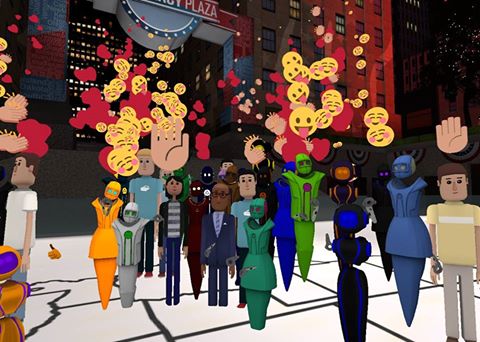
That time we hung out with Al Roker in Time Square August 2017

That one time when we watched the eclipse in VR. August 2017
Then the funding ran out and we had to say goodbye

Microsoft buys and we get More Watts! Sept 2019

Then during the pandemic they (Microsoft) did away with our beloved avatars and gave us real shit to work with.
But the Reggie show were amazing.

in 2021 shit got real

Then is got shut down.
A lifelong jazz aficionado, he changed course to produce bands like Black Flag and Hüsker Dü for the influential SST label.

Published March 10, 2023 Updated March 11, 2023, 10:49 a.m. ET
Glen Lockett, the influential record producer who, working under the name Spot, helped define the jet-turbine sound of American punk rock in the 1980s, recording groundbreaking albums by Black Flag, Hüsker Dü, Minutemen and many others, died on March 4 in Sheboygan, Wis. He was 71.
His death, in a nursing home, was announced in a Facebook post by Joe Carducci, a former co-owner of SST Records, the iconoclastic Hermosa Beach, Calif., label where Mr. Lockett made his name. Mr. Lockett had been hoping for a lung transplant in recent years after a long battle with pulmonary fibrosis, and he had spent most of the last three months in a hospital after a stroke.
As the in-house producer for SST from 1979 to 1985, Mr. Lockett controlled the mixing board on landmark recordings that helped bring American punk from deafening gigs in garages and basements to the mainstream — the college-radio mainstream, at least.
He produced or engineered more than 100 albums for SST, including classics like Black Flag’s “Damaged” (1981), Descendents’ “Milo Goes to College” (1982), Meat Puppets’ first album (1982), Minutemen’s “What Makes a Man Start Fires?” (1982) and Hüsker Dü’s “Zen Arcade” (1984).
10 Essential Recordings
Selections of hardcore American punk recorded by Spot.
In part because SST had limited budgets in the early days, but also because of bands’ wishes and Mr. Lockett’s production philosophy, he typically opted to record live in the studio — all members playing at once — with minimal studio effects, instead of the widespread industry practice of recording one instrument at a time and using overdubs and effects like digital delay and outboard reverb.
As a result, he was able to translate to vinyl the raw, immediate howl of punk that, in a live setting, sent bodies crashing and elbows flying.
“Our first time in the studio with him was for our first Minutemen record, ‘Paranoid Time,’ a seven-song, seven-inch EP, in July of 1980,” Mike Watt, the band’s bassist and co-founder, recalled in an email. “He recorded and mixed us that one night. I think we started at midnight and ended a few hours later.”

“Spotski,” Mr. Watt added, “always was about trying to capture what was us, like with this record — kind of like a ‘gig in front of the microphones’ trip, where he big-time said he didn’t want to get in the way of us trying to bring what we had that made us what we were.”
Mr. Lockett’s sensibility dovetailed with the attitude of SST, which the rock critic Byron Coley once described as “archly xenophobic,” referring to the label’s revulsion for the highly processed sounds being stamped out by the major labels in the hit factories of Los Angeles.
“There was a general dismissal of what rock radio had become, so Spot was bent on capturing what the band was putting out, without softening, buffering or tampering with it,” Mr. Carducci said in a phone interview.
The label’s storm-the-barricades ethos might not have resulted in chart-topping hits, but SST made waves in the industry, growing from “a cash-strapped, cop-hassled storefront operation to easily the most influential and popular underground indie of the ’80s,” as the music journalist Michael Azerrad wrote in a 2001 article for The New York Times.

While he was committed to the punk cause — an avid roller skater, he used to wheel around Los Angeles hanging fliers for gigs by SST bands — he never let the do-it-yourself minimalism espoused by many in the genre limit his musical scope.
He was a skilled guitarist who also played clarinet, banjo, mandolin, drums and even bagpipes; he often joined Minutemen onstage, Mr. Watt said, to play his clarinet during the band’s jams between songs.
Before he fell into the nascent Southern California punk-rock scene in the late 1970s, Mr. Lockett had been performing, recording and writing about jazz for a local newspaper in Hermosa Beach, home of the Lighthouse, a nightclub long considered a mecca of West Coast jazz.
A musical omnivore, he later developed a fascination for traditional Irish music and started a small label of his own, No Auditions, for which he recorded a number of eclectic, Irish-inflected solo albums after he moved from Los Angeles to Austin, Texas, in 1986. He was also a photographer, and published a book of his work, “Sounds of Two Eyes Opening,” in 2014.
“It seems that the whole history of punk rock, and especially the stuff that happened in L.A., is based on a lot of myths,” he said in a 2018 interview published on the Red Bull Music Academy website. “There were a lot more influences and ideas about life and culture that most people either don’t have a clue about, or aren’t really all that willing to accept.”

Glenn Michael Lockett, who later dropped an “n” from his first name, was born on July 1, 1951, in Los Angeles, the youngest of two children of Claybourne Lockett (who went by Buddy), a furrier who later worked as a clerk in the post office of the Ambassador Hotel, and Cynthia (Katz) Lockett, an office manager at a local music academy. His father had served in World War II as one of the famed Tuskegee Airmen.
He is survived by his sister, Cynthia Cyrus.
Growing up in Leimert Park in South Central Los Angeles, Mr. Lockett developed an early love of post-bop jazz.
He got his first guitar at 12 and was soon playing along with British Invasion, Motown and surf-rock hits. As his musical vocabulary developed, he eventually became fascinated with the musically ambitious progressive rock of the early 1970s. At one point he also unsuccessfully auditioned for the genre-hopping rock auteur Captain Beefheart.
By the mid-’70s, however, Mr. Lockett, like a lot of future punk figures, had grown weary of prog, with its pomposity and self-consciously elaborate compositions and arrangements. After he helped friends build a recording studio called Media Arts in Hermosa Beach, he began recording jazz groups, and was inspired by the direct and unfiltered studio approach of the combos he recorded.
Jazz musicians “didn’t want anything fancy,” he said in the Red Bull interview. “They just wanted to get the things down, and they didn’t care if someone played a bad note or not.”
That spirit carried over to his next musical chapter, which began when he was working as a waiter at a vegetarian restaurant. It was there that he met Greg Ginn, who would later be a founder of both Black Flag and SST Records.
Despite their differing musical influences, Mr. Lockett would occasionally jam with Mr. Ginn and the other members of a band called Panic, which later evolved into Black Flag.
When a Black Flag concert at a park in nearby Manhattan Beach erupted into a melee, Mr. Lockett knew he wanted to produce the band. “That show was just so crazy,” he told Red Bull Academy. “I said, ‘I got to record this band before they get killed.’”

When you’ve had absolutely too much wine



Apparently, I’m a civil engineer now. Planning on turning this glory hole into a skate park.

Scott Colburn and James Hudleston with the U.S. Bureau of Reclamation prepare to descend into the Glory Hole Spillway at Whiskeytown Dam on Tuesday, Jan. 30, 2023 to inspect the structure.

Scott Colburn, a civil engineer with the U.S. Bureau of Reclamation, inspects the interior walls of the Glory Hole spillway at Whiskeytown Dam on Tuesday, Jan. 30, 2023.

Radical! Don’t Beef dude.
On the Phenomenon of Bullshit Jobs
A Work Rant
by David Graeber
In the year 1930, John Maynard Keynes predicted that, by century’s end, technology would have advanced sufficiently that countries like Great Britain or the United States would have achieved a 15-hour work week. There’s every reason to believe he was right. In technological terms, we are quite capable of this. And yet it didn’t happen. Instead, technology has been marshaled, if anything, to figure out ways to make us all work more. In order to achieve this, jobs have had to be created that are, effectively, pointless. Huge swathes of people, in Europe and North America in particular, spend their entire working lives performing tasks they secretly believe do not really need to be performed. The moral and spiritual damage that comes from this situation is profound. It is a scar across our collective soul. Yet virtually no one talks about it.
Why did Keynes’ promised utopia—still being eagerly awaited in the ’60s—never materialise? The standard line today is that he didn’t figure in the massive increase in consumerism. Given the choice between less hours and more toys and pleasures, we’ve collectively chosen the latter. This presents a nice morality tale, but even a moment’s reflection shows it can’t really be true. Yes, we have witnessed the creation of an endless variety of new jobs and industries since the ’20s, but very few have anything to do with the production and distribution of sushi, iPhones, or fancy sneakers.
So what are these new jobs, precisely? A recent report comparing employment in the US between 1910 and 2000 gives us a clear picture (and I note, one pretty much exactly echoed in the UK). Over the course of the last century, the number of workers employed as domestic servants, in industry, and in the farm sector has collapsed dramatically. At the same time, ‘professional, managerial, clerical, sales, and service workers’ tripled, growing ‘from one-quarter to three-quarters of total employment.’ In other words, productive jobs have, just as predicted, been largely automated away (even if you count industrial workers globally, including the toiling masses in India and China, such workers are still not nearly so large a percentage of the world population as they used to be.)
But rather than allowing a massive reduction of working hours to free the world’s population to pursue their own projects, pleasures, visions, and ideas, we have seen the ballooning of not even so much of the ‘service’ sector as of the administrative sector, up to and including the creation of whole new industries like financial services or telemarketing, or the unprecedented expansion of sectors like corporate law, academic and health administration, human resources, and public relations. And these numbers do not even reflect on all those people whose job is to provide administrative, technical, or security support for these industries, or for that matter the whole host of ancillary industries (dog-washers, all-night pizza delivery) that only exist because everyone else is spending so much of their time working in all the other ones.
These are what I propose to call ‘bullshit jobs’.
It’s as if someone were out there making up pointless jobs just for the sake of keeping us all working. And here, precisely, lies the mystery. In capitalism, this is precisely what is not supposed to happen. Sure, in the old inefficient socialist states like the Soviet Union, where employment was considered both a right and a sacred duty, the system made up as many jobs as they had to (this is why in Soviet department stores it took three clerks to sell a piece of meat). But, of course, this is the sort of very problem market competition is supposed to fix. According to economic theory, at least, the last thing a profit-seeking firm is going to do is shell out money to workers they don’t really need to employ. Still, somehow, it happens.
While corporations may engage in ruthless downsizing, the layoffs and speed-ups invariably fall on that class of people who are actually making, moving, fixing and maintaining things; through some strange alchemy no one can quite explain, the number of salaried paper-pushers ultimately seems to expand, and more and more employees find themselves, not unlike Soviet workers actually, working 40 or even 50 hour weeks on paper, but effectively working 15 hours just as Keynes predicted, since the rest of their time is spent organizing or attending motivational seminars, updating their facebook profiles or downloading TV box-sets.
The answer clearly isn’t economic: it’s moral and political. The ruling class has figured out that a happy and productive population with free time on their hands is a mortal danger (think of what started to happen when this even began to be approximated in the ’60s). And, on the other hand, the feeling that work is a moral value in itself, and that anyone not willing to submit themselves to some kind of intense work discipline for most of their waking hours deserves nothing, is extraordinarily convenient for them.
Once, when contemplating the apparently endless growth of administrative responsibilities in British academic departments, I came up with one possible vision of hell. Hell is a collection of individuals who are spending the bulk of their time working on a task they don’t like and are not especially good at. Say they were hired because they were excellent cabinet-makers, and then discover they are expected to spend a great deal of their time frying fish. Neither does the task really need to be done—at least, there’s only a very limited number of fish that need to be fried. Yet somehow, they all become so obsessed with resentment at the thought that some of their co-workers might be spending more time making cabinets, and not doing their fair share of the fish-frying responsibilities, that before long there’s endless piles of useless badly cooked fish piling up all over the workshop and it’s all that anyone really does. I think this is actually a pretty accurate description of the moral dynamics of our own economy.
Now, I realise any such argument is going to run into immediate objections: ‘who are you to say what jobs are really “necessary”? What’s necessary anyway? You’re an anthropology professor, what’s the “need” for that?’ (And indeed a lot of tabloid readers would take the existence of my job as the very definition of wasteful social expenditure.) And on one level, this is obviously true. There can be no objective measure of social value.
I would not presume to tell someone who is convinced they are making a meaningful contribution to the world that, really, they are not. But what about those people who are themselves convinced their jobs are meaningless? Not long ago I got back in touch with a school friend who I hadn’t seen since I was 12. I was amazed to discover that in the interim, he had become first a poet, then the front man in an indie rock band. I’d heard some of his songs on the radio having no idea the singer was someone I actually knew. He was obviously brilliant, innovative, and his work had unquestionably brightened and improved the lives of people all over the world. Yet, after a couple of unsuccessful albums, he’d lost his contract, and plagued with debts and a newborn daughter, ended up, as he put it, ‘taking the default choice of so many directionless folk: law school.’ Now he’s a corporate lawyer working in a prominent New York firm. He was the first to admit that his job was utterly meaningless, contributed nothing to the world, and, in his own estimation, should not really exist.
There’s a lot of questions one could ask here, starting with, what does it say about our society that it seems to generate an extremely limited demand for talented poet-musicians, but an apparently infinite demand for specialists in corporate law? (Answer: if 1% of the population controls most of the disposable wealth, what we call ‘the market’ reflects what they think is useful or important, not anybody else.) But even more, it shows that most people in these jobs are ultimately aware of it. In fact, I’m not sure I’ve ever met a corporate lawyer who didn’t think their job was bullshit. The same goes for almost all the new industries outlined above. There is a whole class of salaried professionals that, should you meet them at parties and admit that you do something that might be considered interesting (an anthropologist, for example), will want to avoid even discussing their line of work entirely (one or t’other?) Give them a few drinks, and they will launch into tirades about how pointless and stupid their job really is.
This is a profound psychological violence here. How can one even begin to speak of dignity in labour when one secretly feels one’s job should not exist? How can it not create a sense of deep rage and resentment. Yet it is the peculiar genius of our society that its rulers have figured out a way, as in the case of the fish-fryers, to ensure that rage is directed precisely against those who actually do get to do meaningful work. For instance: in our society, there seems a general rule that, the more obviously one’s work benefits other people, the less one is likely to be paid for it. Again, an objective measure is hard to find, but one easy way to get a sense is to ask: what would happen were this entire class of people to simply disappear? Say what you like about nurses, garbage collectors, or mechanics, it’s obvious that were they to vanish in a puff of smoke, the results would be immediate and catastrophic. A world without teachers or dock-workers would soon be in trouble, and even one without science fiction writers or ska musicians would clearly be a lesser place. It’s not entirely clear how humanity would suffer were all private equity CEOs, lobbyists, PR researchers, actuaries, telemarketers, bailiffs or legal consultants to similarly vanish. (Many suspect it might markedly improve.) Yet apart from a handful of well-touted exceptions (doctors), the rule holds surprisingly well.
Even more perverse, there seems to be a broad sense that this is the way things should be. This is one of the secret strengths of right-wing populism. You can see it when tabloids whip up resentment against tube workers for paralysing London during contract disputes: the very fact that tube workers can paralyse London shows that their work is actually necessary, but this seems to be precisely what annoys people. It’s even clearer in the US, where Republicans have had remarkable success mobilizing resentment against school teachers, or auto workers (and not, significantly, against the school administrators or auto industry managers who actually cause the problems) for their supposedly bloated wages and benefits. It’s as if they are being told ‘but you get to teach children! Or make cars! You get to have real jobs! And on top of that you have the nerve to also expect middle-class pensions and health care?’
If someone had designed a work regime perfectly suited to maintaining the power of finance capital, it’s hard to see how they could have done a better job. Real, productive workers are relentlessly squeezed and exploited. The remainder are divided between a terrorised stratum of the, universally reviled, unemployed and a larger stratum who are basically paid to do nothing, in positions designed to make them identify with the perspectives and sensibilities of the ruling class (managers, administrators, etc.)—and particularly its financial avatars—but, at the same time, foster a simmering resentment against anyone whose work has clear and undeniable social value. Clearly, the system was never consciously designed. It emerged from almost a century of trial and error. But it is the only explanation for why, despite our technological capacities, we are not all working 3–4 hour days.
